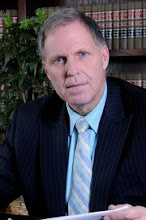
Source: Dallas Morning News 10-31-2008
DALLAS-After 10 months of being at home collecting a paycheck from the city of Dallas, Officer Marcus Winn has returned to work.
Officer Winn was placed on administrative leave on Dec. 2, 2007, after he was accused of assaulting his ex-wife at her home in Arlington. Officer Winn was found not guilty last month of the charges. He returned to patrolling the streets of Dallas on Monday.
"I did not do it. I was at home laying down getting ready for work the next day," Officer Winn said. He said that the statements that the witnesses and his ex-wife gave did not match.
Officer Winn said he is relieved to be back at work. "This is a career that I love and there's nothing better than to help people that call for your assistance," Officer Winn said.Officer Winn has troubled history of finding himself on the other side of the law mostly in domestic-related clashes since his hiring by the Dallas Police Department in 2000. He acknowledged that he's had some bad luck during his career of "people trying to put allegations on me."
In 2003, he was accused of assaulting a fellow officer in the parking lot of the southeast patrol station, where he is still assigned. According to reports, Officer Winn said he approached Officer James Jablon over a comment that he had supposedly made about Officer Winn taking remedial classes. Another officer and Officer Jablon told investigators that Officer Winn bumped him chest to chest and struck him in the face with his index finger. Officer Winn denies that there was ever any physical contact. "He (Officer Jablon) didn't even show up in court," he said. "That's how that got dismissed." He received a written reprimand over that incident.
The following year, the off-duty officer was accused of breaking into a house and attacking his ex-girlfriend's new boyfriend. According to a police report, Officer Winn flagged down responding officers and told them that he had broken into the house and struck the new boyfriend. The ex-girlfriend told police that she had broken off the relationship but that he kept harassing her. He was accused of burglary of a habitation over the incident. A grand jury subsequently no billed him. He was suspended 20 days over the incident. Arlington police records show that Officer Winn and his ex-wife have had a tumultuous relationship going back to at least 2003, resulting in numerous incidents of police being called out to deal with conflicts between them. She has repeatedly accused him of abusing her, though he also has accused her of the same thing. At one point in 2006, the ex-wife's neighbors who were babysitting their child told police that that they were scared of him because of the aggressive way he was acting when he came to pick up the child. In 2007, the ex-wife told police that they had gotten into an argument over their son and that he hit her with his head on the left side of her face. She also said that at one point, he kicked her during the October incident. "I tried to get up and he did not let me. He grabbed my hands and hugged me and sat me back on the bed and told me he was sorry," she told police, the records show. "I was crying and my son was screaming."
She told police that he apologized but took away her cell phone to prevent her from calling 911. She called the police after he left. He later denied that he had been at her apartment.
She later called police and said she didn't want to pursue charges because he was the father of her child. Police filed the charges anyway. They filed charges relating to preventing her from calling 911, unlawful restraint and assault. A witness had also told police that she had heard the couple's son state that his "daddy" had "hit mommy." Officer Winn says that witness is actualy a cousin of an Arlington police detective. Police records also show the witness had changed her account of when she saw Officer Winn's ex-wife with her supposed injuries. Officer Winn alleges that his ex-wife used Halloween paint to make herself look injured and then took pictures of her supposed injuries. Police records state that she did not have fresh bruising when she called police to the home to report the assault, the day after it supposedly happened. He also says that his ex-wife was dating an Arlington police officer. The department's internal affairs division is looking into the incident. What, if any, discipline he will receive has not yet been decided. Officer Winn, a Texarkana native, graduated from Southern Arkansas University with a degree in business administration in 1999. He applied to the Texarkana Police Department in Arkansas but was rejected because he failed the written test, records show. He was working as a shoe salesman at a department store when the Dallas Police Department hired him in March 2000.
Wednesday, April 1, 2009

DWI CHEKPOINTS APPROVED - MAY APPLY TO DALLAS FT. WORTH
AUSTIN -- Drivers in urban cities and counties could be stopped and checked for their sobriety at police checkpoints under a bill tentatively passed Monday by the Texas Senate.
The vote was 21-10 with six Republican and four Democratic senators voting no. A 1994 Texas Court of Criminal Appeals ruling outlawed sobriety checkpoints, but said the Legislature could make them legal.
The checkpoints would be publicized to deter people from drinking and driving, said bill sponsor Sen. John Carona, R-Dallas. He estimated that the drop in drunken driving would save 300 lives each year in Texas, which leads the nation in alcohol-related traffic fatalities.
Carona won support from lawmakers who previously opposed checkpoint bills by requiring that the stops be videotaped and audio recorded. The bill also prohibits police from asking for a driver’s license or insurance card.
Approval from a sheriff or mayor would be needed to set up a checkpoint, which would only be allowed in a county with at least 250,000 residents or a city with at least 500,000 residents.
The vote was 21-10 with six Republican and four Democratic senators voting no. A 1994 Texas Court of Criminal Appeals ruling outlawed sobriety checkpoints, but said the Legislature could make them legal.
The checkpoints would be publicized to deter people from drinking and driving, said bill sponsor Sen. John Carona, R-Dallas. He estimated that the drop in drunken driving would save 300 lives each year in Texas, which leads the nation in alcohol-related traffic fatalities.
Carona won support from lawmakers who previously opposed checkpoint bills by requiring that the stops be videotaped and audio recorded. The bill also prohibits police from asking for a driver’s license or insurance card.
Approval from a sheriff or mayor would be needed to set up a checkpoint, which would only be allowed in a county with at least 250,000 residents or a city with at least 500,000 residents.
Saturday, January 17, 2009
Fort Worth Officer Fired in Drug Accusations
FORT WORTH — A Fort Worth police officer has been fired on accusations that he illegally bought, and on one occasion ingested, prescription drugs while in uniform and driving his patrol car.
Jerry "J.D." Hall Jr., who had been with the department since 1992, was indefinitely suspended — tantamount to being fired — effective today, according to a letter signed by new Police Chief Jeff Halstead and filed with the Civil Service Commission on Monday.
Attorney Richard Carter with the Combined Law Enforcement Associations of Texas said Hall, 45, has appealed and "will be using his time to resolve his health issues while awaiting his appeal hearing."
"Officer Hall is confident that there will be a resolution during the year 2009," Carter said.
The internal affairs division began investigating Hall in August after an arrested woman being driven to jail told an officer that she had information about another officer named "Jerry" who was buying and using drugs, according to the letter.
The woman picked Hall out of a photo lineup as a person she had seen buy Xanax from one of his relatives and ingest it, the letter states.
The woman told investigators that she saw Hall buy drugs three times in July, twice while in uniform and driving his police car. During one of the on-duty purchases, which took place at an Arlington bingo hall, the woman said, she saw Hall ingest two Xanax pills.
She also told investigators that during the last purchase she witnessed in late July, an off-duty Hall bought what appeared to be "close to 100 pills that would not fit in the bottle."
A narcotics investigation was initiated, and investigators learned that Hall’s relative had been selling Xanax to him for about eight months beginning around December 2007, the letter states.
http://www.sloanelaw.com
Jerry "J.D." Hall Jr., who had been with the department since 1992, was indefinitely suspended — tantamount to being fired — effective today, according to a letter signed by new Police Chief Jeff Halstead and filed with the Civil Service Commission on Monday.
Attorney Richard Carter with the Combined Law Enforcement Associations of Texas said Hall, 45, has appealed and "will be using his time to resolve his health issues while awaiting his appeal hearing."
"Officer Hall is confident that there will be a resolution during the year 2009," Carter said.
The internal affairs division began investigating Hall in August after an arrested woman being driven to jail told an officer that she had information about another officer named "Jerry" who was buying and using drugs, according to the letter.
The woman picked Hall out of a photo lineup as a person she had seen buy Xanax from one of his relatives and ingest it, the letter states.
The woman told investigators that she saw Hall buy drugs three times in July, twice while in uniform and driving his police car. During one of the on-duty purchases, which took place at an Arlington bingo hall, the woman said, she saw Hall ingest two Xanax pills.
She also told investigators that during the last purchase she witnessed in late July, an off-duty Hall bought what appeared to be "close to 100 pills that would not fit in the bottle."
A narcotics investigation was initiated, and investigators learned that Hall’s relative had been selling Xanax to him for about eight months beginning around December 2007, the letter states.
http://www.sloanelaw.com
Thursday, January 8, 2009
Drug Enforcement Administration Refuses Hearing to Remove Marijuana From Schedule of Illegal Narcotics
NOTE from David Sloane: Marijuana is currently a Schedule I Narcotic (along with LSD and Heroin) which by definition means there is no accepted medical use. As the various states are finding legitimate medical uses for Marijuana there is pressure to remove Marijuana from the list of scheduled narcotics. Here's the DEAs most recent argument against doing so:
U.S. Department of Justice
Drug Enforcement Administration
Office of the Deputy Administrator
Washington, D.C. 20537
December 19, 2008
Mr. Carl Olsen
130 E Aurora Avenue
Des Moines, Iowa 50313-3654
Dear Mr. Olsen:
On May 12,2008, you petitioned the Drug Enforcement Administration (DEA) to initiate rulemaking proceedings under the rescheduling provisions of the Controlled Substances Act (CSA). You requested that DEA remove marijuana from schedule I of the CSA based on your assertion that the federal definition for a schedule I controlled substance no longer applies to it. You contend that federal drug law gives states the authority to determine accepted medical use and that marijuana, therefore, has a "currently accepted medical use in treatment in the United States" because 12 states have passed laws relating to the use of marijuana for medical purposes. Based on these same assertions, on August 5, 2008, you filed a "Notice and Deadline to Cease and Desist Illegal Enforcement of Fraudulant [sic] Marijuana Regulation." The notice states that the DEA must "cease and desist enforcement of the illegal regulation of marijuana" within 30 days or you will file a federal civil injunction. The Deputy Administrator finds, for the reasons stated herein, that the grounds upon which you rely are not sufficient to justify the initiation of proceedings for the removal of marijuana from schedule I of the CSA. Accordingly, your petition is hereby denied. For the same reasons, the Deputy Administrator finds that the notice to cease and desist also lacks merit. Accordingly, to the extent you seek action based on this filing, this request also is hereby denied.
Legal Background
When the CSA was created, Congress specified the initial scheduling of controlled substances and the criteria by which controlled substances could be rescheduled. 21 U.S.C. 811-812 (2008). Congress placed marijuana into schedule I. See Comprehensive Drug Abuse Prevention and Control Act of 1970, Pub. L. 91-513, 202(c), schedule I (c)(10), 84 Stat. 1247. The Attorney General "may by rule" transfer a drug or other substance between schedules if he finds that such drug or other substance has a potential for abuse and makes with respect to such drug or other substance the findings prescribed by subsection (b) of Section 812 for the schedule in which such drug is to be placed. 21 U.S.C. 811(a)(I).
In order for a substance to be placed in schedule I, the Attorney General must find that:
(A) The drug or other substance has a high potential for abuse;
(B) The drug or other substance has no currently accepted medical use in treatment in the United States; and
(C) There is a lack of accepted safety for use of the drug or other substance under medical supervision. 21 U.S.C. 812(b)(1)(A)-(C).
To be classified in one of the other schedules (II through V), a drug of abuse must have a "currently accepted medical use in treatment in the United States." [Footnote 1]Footnote 1: A controlled substance in schedule II must have either "a currently accepted medical use in treatment in the United States or a currently accepted medical use with severe restrictions." 21 U.S.C. 812(b)(2)(B); see also Notice of Denial of Petition, 66 Fed. Reg. 20,038, 20,038 (Apr. 18,2001) ("Congress established only one schedule - schedule I - for drugs of abuse with 'no currently accepted medical use in treatment in the United States' and a 'lack of accepted safety for use ... under medical supervision.'").
The CSA provides that, in making any rescheduling determination, the Attorney General shall consider the following eight factors:
(1) The drug's actual or relative potential for abuse;
(2) Scientific evidence of its pharmacological effect, if known;
(3) The state of current scientific knowledge regarding the drug;
(4) Its history and current pattern of abuse;
(5) The scope, duration, and significance of abuse;
(6) What, if any, risk there is to the public health;
(7) The drug's psychic or physiological dependence liability; and
(8) Whether the substance is an immediate precursor of a substance already controlled under the CSA.21 U.S.C. 811(c).
The Attorney General has delegated this authority to the Administrator of DEA, who has redelegated it to the Deputy Administrator. See 28 C.F.R. 0.100(b) & 0.104, Appendix to Subpart R, sec. 12 (2008).The CSA further provides that, before initiating proceedings to reschedule a drug, the Administrator must gather the necessary data and request from the Secretary of Health and Human Services (HHS) a scientific and medical evaluation and recommendations as to whether the controlled substance should be rescheduled as the petitioner proposes. 21 U.S.C. 811(b); 21 C.F.R. 130S.43(d); Gettman v. DEA, 290 F.3d 430, 432 (D.C. Cir. 2002). In making such evaluation and recommendations, the Secretary must consider the factors listed in paragraphs (2), (3), (6), (7), and (8) above, and any scientific or medical considerations involved in paragraphs (1), (4), and (5) above. 21 U.S.C. 811(b). The Secretary has delegated this function to the Assistant Secretary for Health. [Footnote 2] If the Administrator determines that the evaluations and recommendations of the Assistant Secretary and "all other relevant data" constitute substantial evidence that the drug that is the subject of the petition should be subjected to lesser control or removed entirely from the schedules, he shall initiate proceedings to reschedule the drug or remove it from the schedules as the evidence dictates. 21 U.S.C. 811(b); 21 C.F.R. 1308.43(e).Footnote 2: As set forth in a memorandum of understanding entered into by HHS, the Food and Drug Administration (FDA), and the National Institute on Drug Abuse (NIDA), FDA acts as the lead agency within HHS in carrying out the Secretary's scheduling responsibilities under the CSA, with the concurrence of NIDA. Memorandum of Understanding with the Nat'l Inst. on Drug Abuse, 50 Fed. Reg. 9,518 (Mar. 8, 1985).
Basis for Denial of Your Petition and Notice
Your petition and notice rest on your contention that federal drug law gives states the authority to determine, for purposes of the CSA, whether a drug has a "currently accepted medical use in treatment in the United States," and that marijuana has such a currently accepted medical use because 12 states have passed laws relating to the use of marijuana for medical purposes. See Carl Olsen Petition for Marijuana Rescheduling (May 12, 200S) ("Pet."); Carl Olsen Memorandum of Law in Support of Petition for Marijuana Rescheduling (May 25, 200S) ("Mem."); Notice and Deadline to Cease and Desist Illegal Enforcement of Fraudulant [sic] Marijuana Regulation (Aug. 5, 200S) ("Notice"). [Footnote 3] For the following reasons, your contention is not in accordance with law. Footnote 3: You do not, in this petition or notice, dispute whether marijuana meets the first criterion for schedule I or schedule II, i.e., that the substance has a high potential for abuse. Nor do you purport to present new scientific or medical evidence - beyond that previously considered by DEA in its prior denial of another petition to reschedule marijuana, see Notice of Denial of Petition, 66 Fed. Reg. at 20,038 - regarding whether marijuana has a currently accepted medical use. See generally Pet.; Mem.; Notice. Finally, you do not raise any religious use arguments such as those you previously raised and recently had rejected in the United States Court of Appeals for the Eighth Circuit. See Olsen v. Mukasey, 541 F.3d 827 (8th Cir. 2008) (rejecting Olsen's religious use claims under the Religious Freedom Restoration Act and the Religious Land Use and Institutionalized Persons Act and rejecting Olsen's free exercise and equal protection claims).
A. The CSA's Statutory Scheme
The CSA's statutory scheme disproves your contention that federal drug law gives states the authority to determine whether a drug has a "currently accepted medical use" within the meaning of the CSA. You rely on Section 903 of the CSA, see Pet. at 2; Mem. at 16; Notice at 1, which provides that: "No provision of this subchapter shall be construed as indicating an intent on the part of the Congress to occupy the field in which that provision operates, including criminal penalties, to the exclusion of any state law on the same subject matter which would otherwise be within the authority of the State, unless there is a positive conflict between that provision of this subchapter and that State law so that the two cannot consistently stand together." 21 U.S.C. 903 (2008). As a threshold matter, 21 U.S.C. 903 merely reaffirms, for purposes of the CSA, what is inherent in the supremacy clause of the United States Constitution: that any state law that actually conflicts with federal law is preempted by federal law and therefore invalid under the supremacy clause. [Footnote 4] Section 903 also provides that, so long as the states do not enact a law relating to controlled substances that creates a positive conflict with the CSA, the states are free to enact laws regulating controlled substances which would otherwise be within their authority that will operate alongside the CSA. Thus, it would be antithetical to the text of section 903 to cite it for the proposition that state controlled substance laws that conflict with the CSA can override or frustrate the purposes of the CSA. As the Supreme Court stated in the context of marijuana possession and cultivation taking place in purported compliance with California law: "The Supremacy Clause unambiguously provides that if there is any conflict between federal and state law, federal law shall prevail." [Footnote 5] Footnote 4: See, e.g., California Fed. Sav. & Loan Assoc. v. Guerra, 479 U.S. 272, 280-281 (1987). Footnote 5: Gonzales v. Raich, 545 U.S. 1, 29 (2005). Furthermore, the CSA plainly does not assign to the states the authority to make findings relevant to CSA scheduling determinations. Rather, the CSA expressly delegates the task of making such findings - including whether a substance has any currently accepted medical use - to the Attorney General. 21 U.S.C. 811
(a). The CSA also expressly tasks the Secretary of HHS to provide a scientific and medical evaluation and scheduling recommendations to inform the Attorney General's findings. 21 U.S.C. 811
(b). [Footnote 6] That Congress explicitly provided scheduling authority to these two federal entities further precludes your argument that Section 903 reserves this authority to the states.Footnote 6: DEA regulations echo this statutory scheme. See 21 C.F.R. 1308.43.
In addition, the CSA explicitly provides that in making a scheduling determination, the Attorney General shall consider the following eight factors:
(1) The drug's actual or relative potential for abuse;
(2) Scientific evidence of its pharmacological effect, if known;
(3) The state of current scientific knowledge regarding the drug;
(4) Its history and current pattern of abuse;
(5) The scope, duration, and significance of abuse;
(6) What, if any, risk there is to the public health;
(7) The drug's psychic or physiological dependence liability; and
(8) Whether the substance is an immediate precursor of a substance already controlled under the CSA.21 U.S.C. 811(c).
These factors do not include state law. The CSA's statutory text evidences that Congress did not envision such a role for state law in establishing the schedules of controlled substances under the CSA. [Footnote 7]Footnote 7: DEA previously conducted lengthy proceedings to review a petition to reschedule marijuana from 1995 through 2001. After requesting and reviewing a scientific and medical evaluation from HHS, the Administrator denied the petition on the grounds that marijuana has no currently accepted medical use and because it is not safe for use even under medical supervision. Notice of Denial of Petition, 66 Fed. Reg. at 20,038, pet. for review dismissed, Gettman, 290 F.3d at 436.
As you note, the Coalition for Rescheduling Cannabis filed a petition with the DEA in October 2002 discussing scientific and medical findings relating to the medical use of marijuana. That petition remains pending.
B. Gonzales v. Oregon and Other Recent Supreme Court Cases. You further rely on Gonzales v. Oregon, 546 U.S. 243 (2006). See Pet. at 2-3; Mem. at 13; Notice at 4. This reliance also is misplaced. You argue that Oregon supports your petition by requiring federal authorities to defer to states' determinations on issues of medical practice. To the contrary, Oregon affirms the core federal authority of the Attorney General, in consultation with the Secretary of HHS, as to drug scheduling. In Oregon, the United States Supreme Court considered the Attorney General's Interpretive Rule prohibiting doctors from prescribing controlled substances for use in physician-assisted suicide under an Oregon state law that permitted the procedure. Id. at 248. The Court held that the Rule was not entitled to deference because it was not issued pursuant to an explicit delegation of rule making authority. Id. at 258-69. The Court did not find the Attorney General's interpretation persuasive and invalidated the Rule because the CSA "manifests no intent to regulate the practice of medicine generally." Id. at 270.In so holding, however, the Court repeatedly cited by contrast - as a valid and explicit delegation of authority - the Attorney General's power as to drug scheduling. [Footnote 8] The Court observed that, by the text of the CSA itself, Congress had delegated "control" authority to the Attorney General to add, remove, or reschedule substances. [Footenote 9] The Court further cited the CSA's detailed scheduling procedures, including the requirement to request a scientific and medical evaluation by the Secretary of HHS. Id. at 260. Oregon thus confirmed that, in contrast to the invalidated Rule, drug scheduling authority and the corresponding scheduling procedures are an appropriate exercise of the federal power granted in the CSA. Footnote 8: See Oregon, 546 U.S. at 262 ("It would be anomalous for Congress to have painstakingly described the Attorney General's limited authority to ... schedule a single drug, but to have given him, just by implication, authority to declare an entire class of activity outside 'the course of professional practice' and therefore a criminal violation of the CSA.").Footnote 9: The Court noted that the term "control" is a term of art in the CSA, meaning to "add a drug or other substance ... to a schedule ... whether by transfer from another schedule or otherwise." Oregon, 546 U.S. at 260 (quoting 21 U.S.C. 802(5)). The Court also approvingly cited the CSA's explicit allocation of medical judgments in the scheduling context - not, as you argue, to states - but rather, to the Secretary: "The CSA allocates decision making powers among statutory actors so that medical judgments, if they are to be decided at the federal level and for the limited objects of the statute, are placed in the hands of the Secretary." Id. at 265. Whereas the invalidated Rule involved an overly broad assertion of authority, the drug scheduling context exemplified the "CSA's consistent delegation of medical judgments to the Secretary and its otherwise careful allocation of powers." Id. at 272. Thus, far from giving authority to the states, Oregon instead confirms the Attorney General's explicit authority, in conjunction with the Secretary's recommendations on scientific and medical matters, as to drug scheduling. The two other recent Supreme Court cases you cite, see Mem. at 15-16; Notice at 3, likewise affirmed the primacy of federal law over state marijuana laws. In United States v. Oakland Cannabis Buyers' Cooperative, 532 U.S. 483 (2001) ("OCBC"), the Court held that no medical necessity exception existed to the CSA's prohibition on manufacturing and distributing marijuana. Notwithstanding California state law authorizing possession and cultivation of marijuana for claimed medical purposes, Congress' clear determination that all schedule I controlled substances, including marijuana, have no currently accepted medical use forecloses any argument as to whether such drugs can be dispensed and prescribed for medical use. Id. at 493. The Court in OCBC was explicit in stating that "for purposes of the [CSA], marijuana has 'no currently accepted medical use' at all. 812." Id. at 491. Similarly, in Raich, 545 U.S. 1, the Court held that, even in a state that had legalized marijuana activity for claimed medical use, Congress' federal commerce clause power extended to prohibit purportedly intrastate cultivation and use of marijuana in compliance with the state law. "Limiting the activity to marijuana possession and cultivation 'in accordance with state law' cannot serve to place respondents' activities beyond congressional reach." Id. at 29.
C. Whether A Drug Has A "Currently Accepted Medical Use in Treatment in the United States"Your argument that there is no federal definition of"currently accepted medical use" also fails.
In order to determine whether a substance has a "currently accepted medical use," the Administrator applies a five-part test:
1) The drug's chemistry must be known and reproducible;
2) There must be adequate safety studies;
3) There must be adequate and well-controlled studies proving efficacy;
4) The drug must be accepted by qualified experts; and
5) The scientific evidence must be widely available.
Alliance for Cannabis Therapeutics v. DEA, 15 F.3d 1131, 1135 (D.C. Cir. 1994) ("ACT II"). This test was approved by the United States Court of Appeals for the D.C. Circuit as a reasonable interpretation of the statutory language. See Id. at 1134-5, 1137 (approving the Administrator's Final Order applying these five criteria); see also Alliance for Cannabis Therapeutics v. DEA, 930 F.2d 936, 939 (D.C. Cir. 1991) ("ACT I"). Significantly, with respect to your petition, this test includes no reference to state law.
D. Other Arguments as to Currently Accepted Medical UseA substantial portion of the remainder of your memorandum in support of your current petition and your notice merely rehash arguments as to "currently accepted medical use" that you unsuccessfully asserted when you petitioned DEA to reschedule marijuana in 1992 and when you sought review of DEA's denial of that petition by the United States Court of Appeals for the District of Columbia Circuit. The United States Court of Appeals, in declining your petition for review in a per curiam order issued October 3, 1996, stated that the arguments you raised "occasion no need for an opinion." Olsen v. DEA, No. 94-1605, 1996 WL 590870 (D.C. Cir. Oct. 3, 1996). It is, therefore, unnecessary for DEA to revisit these same arguments yet again in 2008. Nevertheless, to ensure completeness of the record, we briefly address and dismiss these contentions. First, you discuss again at length litigation relating to the 1972 petition to reschedule marijuana filed by the National Organization for the Reform of Marijuana Laws (NORML), see Mem. at 7-9, and the United States Court of Appeals for the First Circuit's decision in Grinspoon v. DEA, 828 F.2d 881 (1st Cir. 1987). See Mem. at 9-12; Notice at 2. These cases are inapposite, however, as they were superseded by the subsequent ACT I and ACT II decisions approving the present five-factor test. See ACT II, 15 F.3d at 1133 (noting "[t]he petition to reschedule marijuana was first filed [by NORML] in 1972 and has been before this court on four prior occasions ...."); ACT I, 930 F.2d at 939-40 (explicitly distinguishing Grinspoon). [Footnote l0]Footnote 10: The Grinspoon court never considered the present five-part test, but rather invalidated only a 1986 version of the "currently accepted medical use" test that depended on FDA approval. 828 F.2d at 884. On administrative remand, the test evolved before being replaced with the present five-part test approved in ACT I and ACT II. See Schedules of Controlled Substances, 53 Fed. Reg. 5,156, 5,157 (Feb. 22,1988) (formulating alternative eight-factor test following Grinspoon remand); Marijuana Scheduling Petition; Denial of Petition, 54 Fed. Reg. 53,767, 53,783 (Dec. 29, 1989) (applying eight-factor test); Marijuana Scheduling Petition; Denial of Petition; Remand, 57 Fed. Reg. 10,499, 10,506 (Mar. 26, 1992) (discarding eight-factor test and applying present five-part test). As to possible duplication of criteria between the 1986 version of the test Grinspoon rejected and the present test, the ACT I court explicitly distinguished Grinspoon, stating that the First Circuit "never suggested the DEA Administrator was foreclosed from incorporating and relying on those standards employed by the FDA that are relevant to the pharmaceutical qualities of the drug." 930 F.2d at 939. Second, you reiterate arguments regarding the Convention on Psychotropic Substances, contending that it was modified in 1991 to allow for the medical use of the pharmaceutically pure primary psychoactive ingredient in marijuana, delta-9-THC, and that this ingredient has been rescheduled twice, from schedule I to schedule III. Mem. at 4. You further contend that plants are not typically scheduled in schedules more restrictive than the psychoactive substances that are obtained from them. Mem. at 5. Under the CSA, however, the regulation of chemicals and the plant material are distinct from each other: drugs or other substances are treated and classified differently, according to the enumerated statutory criteria. 21 U.S.C. 812(b); see also Final Order, In the Matter of Petition of Carl Eric Olsen (May 16, 1994) (rejecting petition to reschedule marijuana); Olsen, 1996 WL 590870, at *1 (denying Olsen's petition for review). Whether marijuana is a source of delta-9-THC is irrelevant to the status of marijuana under the CSA. None of your remaining arguments as to whether marijuana has a currently accepted medical use have merit. [Footnote 11] First, you reference a portion of the 1970 legislative history of the CSA relating to appointment of a commission that issued a report on marijuana in 1972, citing a portion of the 1972 report itself. See Mem. at 2-3. In the more than 36 years that have elapsed since these materials were published, however, numerous individuals and marijuana legalization advocates have pointed to the 1972 marijuana report to justify CSA violations involving marijuana, to challenge the constitutionality of the federal marijuana laws, or, as with your latest petition, to argue that marijuana should be deemed to have medical efficacy for purposes of the CSA. [Footnote 12] None of these efforts have ever succeeded for the simple reason that Congress took no action to alter the CSA in any respect as a result of the 1972 report. The fact that Congress has not rescheduled marijuana speaks for itself.Footnote 11: Your notice in particular exhibits a fundamental misunderstanding of the "currently accepted medical use" standard. You argue that the DEA should have rescheduled marijuana in 1996 as soon as one state (California) passed legislation relating to the medical use of marijuana, citing Raich, OCBC, and Grinspoon. Notice at 2-3. But none of these cases support your argument. First, as you acknowledge, see Notice at 3, Raich noted that Congress classified marijuana in schedule I, that is, "Congress expressly found that [marijuana] has no acceptable medical uses." 545 U.S. at 27. Second, you ignore that OCBC specifically rejected an exception for the medical use of marijuana on the basis that Congress, and not the Attorney General, had placed marijuana in schedule I. The Court held:It is clear from the text of the [CSA] that Congress has made a determination that marijuana has no medical benefits worthy of an exception .... The statute ... includes no exception at all for any medical use of marijuana. Unwilling to view this omission as an accident, and unable in any event to override a legislative determination manifest in a statute, we reject the [plaintiff's] argument.532 U.S. at 493. Third, you misstate the holding of Grinspoon. That court did not say, as you argue, that a controlled substance cannot be scheduled in schedule I if it has accepted medical use anywhere in the United States; rather, it said only that "Congress did not intend . to require a fmding of recognized medical use in every state." 828 F.2d at 886 (emphasis added).Footnote 12: See, e.g., United States v. Cannabis Cultivators Club, 5 F. Supp. 2d 1086, 1105 (N.D. Cal. 1998); NORML v. Bell, 488 F. Supp. 123, 128 (D.D.C. 1980); United States v. LaFroscia, 354 F. Supp. 1338, 1340 (S.D.N.Y. 1973).You also observe that the federal government has supplied marijuana to medical patients through a program of compassionate use. Mem. at 5-6 (citing Kuromiya v. United States, 78 F. Supp. 2d 367 (E.D. Pa. 1999)). The existence of this exception is not a ground for rescheduling. As the federal district court held in Kuromiya, the government's decision to continue the program at all was a "means of balancing" the interests of those who had relied on the drug with the government's desire to avoid distributing marijuana. 78 F. Supp. 2d at 370-71. You further claim that one participant's primary care doctor has retired, and that she is not able to find another doctor willing to prescribe marijuana because of the stigma associated with prescribing a schedule I substance. Mem. at 6. You have not provided any evidence to support this contention. Even if you had, one individual's potential hardship to participate in a compassionate use program is not adequate legal grounds for rescheduling. See 21 U.S.C. 811(c).Finally, you argue that the "DEA's own Administrative Law Judge [ALJ Young] has already determined that marijuana is safe for use under medical supervision." Olsen Petition at 4. As you acknowledge, however, see Pet. at 3, the DEA Administrator unambiguously rejected ALJ Young's determination in In re Marijuana Rescheduling, DEA Dkt. No. 86-22 (Sept. 6, 1998) (attached as Ex. 1 to Pet.). The D.C. Circuit later affirmed the DEA's final order (Mar. 26, 1992) in ACT II, 15 F.3d at 1135 (denying petition to review DEA's final order declining to reschedule marijuana). Nor is it accurate that the Administrator's rejection of ALJ Young's determination depended on the fact that no state had accepted the use of marijuana for medical purposes. In fact, ALJ Young's opinion had noted the efforts of a number of states to pass such legislation. See, e.g., In re Marijuana Rescheduling, DEA Dkt. No. 86-22, 21,22,28. In any case, for the reasons set forth in detail above, the existence of state legislation is not relevant to a scheduling determination.ConclusionAccordingly, there is no statutory basis for DEA to grant your petition to initiate proceedings to reschedule marijuana. Nor is there any basis to initiate any action based on your August 5th notice. The Petitioner's request is denied.
Sincerely,
Michele M. Leonhart
Deputy Administrator
U.S. Department of Justice
Drug Enforcement Administration
Office of the Deputy Administrator
Washington, D.C. 20537
December 19, 2008
Mr. Carl Olsen
130 E Aurora Avenue
Des Moines, Iowa 50313-3654
Dear Mr. Olsen:
On May 12,2008, you petitioned the Drug Enforcement Administration (DEA) to initiate rulemaking proceedings under the rescheduling provisions of the Controlled Substances Act (CSA). You requested that DEA remove marijuana from schedule I of the CSA based on your assertion that the federal definition for a schedule I controlled substance no longer applies to it. You contend that federal drug law gives states the authority to determine accepted medical use and that marijuana, therefore, has a "currently accepted medical use in treatment in the United States" because 12 states have passed laws relating to the use of marijuana for medical purposes. Based on these same assertions, on August 5, 2008, you filed a "Notice and Deadline to Cease and Desist Illegal Enforcement of Fraudulant [sic] Marijuana Regulation." The notice states that the DEA must "cease and desist enforcement of the illegal regulation of marijuana" within 30 days or you will file a federal civil injunction. The Deputy Administrator finds, for the reasons stated herein, that the grounds upon which you rely are not sufficient to justify the initiation of proceedings for the removal of marijuana from schedule I of the CSA. Accordingly, your petition is hereby denied. For the same reasons, the Deputy Administrator finds that the notice to cease and desist also lacks merit. Accordingly, to the extent you seek action based on this filing, this request also is hereby denied.
Legal Background
When the CSA was created, Congress specified the initial scheduling of controlled substances and the criteria by which controlled substances could be rescheduled. 21 U.S.C. 811-812 (2008). Congress placed marijuana into schedule I. See Comprehensive Drug Abuse Prevention and Control Act of 1970, Pub. L. 91-513, 202(c), schedule I (c)(10), 84 Stat. 1247. The Attorney General "may by rule" transfer a drug or other substance between schedules if he finds that such drug or other substance has a potential for abuse and makes with respect to such drug or other substance the findings prescribed by subsection (b) of Section 812 for the schedule in which such drug is to be placed. 21 U.S.C. 811(a)(I).
In order for a substance to be placed in schedule I, the Attorney General must find that:
(A) The drug or other substance has a high potential for abuse;
(B) The drug or other substance has no currently accepted medical use in treatment in the United States; and
(C) There is a lack of accepted safety for use of the drug or other substance under medical supervision. 21 U.S.C. 812(b)(1)(A)-(C).
To be classified in one of the other schedules (II through V), a drug of abuse must have a "currently accepted medical use in treatment in the United States." [Footnote 1]Footnote 1: A controlled substance in schedule II must have either "a currently accepted medical use in treatment in the United States or a currently accepted medical use with severe restrictions." 21 U.S.C. 812(b)(2)(B); see also Notice of Denial of Petition, 66 Fed. Reg. 20,038, 20,038 (Apr. 18,2001) ("Congress established only one schedule - schedule I - for drugs of abuse with 'no currently accepted medical use in treatment in the United States' and a 'lack of accepted safety for use ... under medical supervision.'").
The CSA provides that, in making any rescheduling determination, the Attorney General shall consider the following eight factors:
(1) The drug's actual or relative potential for abuse;
(2) Scientific evidence of its pharmacological effect, if known;
(3) The state of current scientific knowledge regarding the drug;
(4) Its history and current pattern of abuse;
(5) The scope, duration, and significance of abuse;
(6) What, if any, risk there is to the public health;
(7) The drug's psychic or physiological dependence liability; and
(8) Whether the substance is an immediate precursor of a substance already controlled under the CSA.21 U.S.C. 811(c).
The Attorney General has delegated this authority to the Administrator of DEA, who has redelegated it to the Deputy Administrator. See 28 C.F.R. 0.100(b) & 0.104, Appendix to Subpart R, sec. 12 (2008).The CSA further provides that, before initiating proceedings to reschedule a drug, the Administrator must gather the necessary data and request from the Secretary of Health and Human Services (HHS) a scientific and medical evaluation and recommendations as to whether the controlled substance should be rescheduled as the petitioner proposes. 21 U.S.C. 811(b); 21 C.F.R. 130S.43(d); Gettman v. DEA, 290 F.3d 430, 432 (D.C. Cir. 2002). In making such evaluation and recommendations, the Secretary must consider the factors listed in paragraphs (2), (3), (6), (7), and (8) above, and any scientific or medical considerations involved in paragraphs (1), (4), and (5) above. 21 U.S.C. 811(b). The Secretary has delegated this function to the Assistant Secretary for Health. [Footnote 2] If the Administrator determines that the evaluations and recommendations of the Assistant Secretary and "all other relevant data" constitute substantial evidence that the drug that is the subject of the petition should be subjected to lesser control or removed entirely from the schedules, he shall initiate proceedings to reschedule the drug or remove it from the schedules as the evidence dictates. 21 U.S.C. 811(b); 21 C.F.R. 1308.43(e).Footnote 2: As set forth in a memorandum of understanding entered into by HHS, the Food and Drug Administration (FDA), and the National Institute on Drug Abuse (NIDA), FDA acts as the lead agency within HHS in carrying out the Secretary's scheduling responsibilities under the CSA, with the concurrence of NIDA. Memorandum of Understanding with the Nat'l Inst. on Drug Abuse, 50 Fed. Reg. 9,518 (Mar. 8, 1985).
Basis for Denial of Your Petition and Notice
Your petition and notice rest on your contention that federal drug law gives states the authority to determine, for purposes of the CSA, whether a drug has a "currently accepted medical use in treatment in the United States," and that marijuana has such a currently accepted medical use because 12 states have passed laws relating to the use of marijuana for medical purposes. See Carl Olsen Petition for Marijuana Rescheduling (May 12, 200S) ("Pet."); Carl Olsen Memorandum of Law in Support of Petition for Marijuana Rescheduling (May 25, 200S) ("Mem."); Notice and Deadline to Cease and Desist Illegal Enforcement of Fraudulant [sic] Marijuana Regulation (Aug. 5, 200S) ("Notice"). [Footnote 3] For the following reasons, your contention is not in accordance with law. Footnote 3: You do not, in this petition or notice, dispute whether marijuana meets the first criterion for schedule I or schedule II, i.e., that the substance has a high potential for abuse. Nor do you purport to present new scientific or medical evidence - beyond that previously considered by DEA in its prior denial of another petition to reschedule marijuana, see Notice of Denial of Petition, 66 Fed. Reg. at 20,038 - regarding whether marijuana has a currently accepted medical use. See generally Pet.; Mem.; Notice. Finally, you do not raise any religious use arguments such as those you previously raised and recently had rejected in the United States Court of Appeals for the Eighth Circuit. See Olsen v. Mukasey, 541 F.3d 827 (8th Cir. 2008) (rejecting Olsen's religious use claims under the Religious Freedom Restoration Act and the Religious Land Use and Institutionalized Persons Act and rejecting Olsen's free exercise and equal protection claims).
A. The CSA's Statutory Scheme
The CSA's statutory scheme disproves your contention that federal drug law gives states the authority to determine whether a drug has a "currently accepted medical use" within the meaning of the CSA. You rely on Section 903 of the CSA, see Pet. at 2; Mem. at 16; Notice at 1, which provides that: "No provision of this subchapter shall be construed as indicating an intent on the part of the Congress to occupy the field in which that provision operates, including criminal penalties, to the exclusion of any state law on the same subject matter which would otherwise be within the authority of the State, unless there is a positive conflict between that provision of this subchapter and that State law so that the two cannot consistently stand together." 21 U.S.C. 903 (2008). As a threshold matter, 21 U.S.C. 903 merely reaffirms, for purposes of the CSA, what is inherent in the supremacy clause of the United States Constitution: that any state law that actually conflicts with federal law is preempted by federal law and therefore invalid under the supremacy clause. [Footnote 4] Section 903 also provides that, so long as the states do not enact a law relating to controlled substances that creates a positive conflict with the CSA, the states are free to enact laws regulating controlled substances which would otherwise be within their authority that will operate alongside the CSA. Thus, it would be antithetical to the text of section 903 to cite it for the proposition that state controlled substance laws that conflict with the CSA can override or frustrate the purposes of the CSA. As the Supreme Court stated in the context of marijuana possession and cultivation taking place in purported compliance with California law: "The Supremacy Clause unambiguously provides that if there is any conflict between federal and state law, federal law shall prevail." [Footnote 5] Footnote 4: See, e.g., California Fed. Sav. & Loan Assoc. v. Guerra, 479 U.S. 272, 280-281 (1987). Footnote 5: Gonzales v. Raich, 545 U.S. 1, 29 (2005). Furthermore, the CSA plainly does not assign to the states the authority to make findings relevant to CSA scheduling determinations. Rather, the CSA expressly delegates the task of making such findings - including whether a substance has any currently accepted medical use - to the Attorney General. 21 U.S.C. 811
(a). The CSA also expressly tasks the Secretary of HHS to provide a scientific and medical evaluation and scheduling recommendations to inform the Attorney General's findings. 21 U.S.C. 811
(b). [Footnote 6] That Congress explicitly provided scheduling authority to these two federal entities further precludes your argument that Section 903 reserves this authority to the states.Footnote 6: DEA regulations echo this statutory scheme. See 21 C.F.R. 1308.43.
In addition, the CSA explicitly provides that in making a scheduling determination, the Attorney General shall consider the following eight factors:
(1) The drug's actual or relative potential for abuse;
(2) Scientific evidence of its pharmacological effect, if known;
(3) The state of current scientific knowledge regarding the drug;
(4) Its history and current pattern of abuse;
(5) The scope, duration, and significance of abuse;
(6) What, if any, risk there is to the public health;
(7) The drug's psychic or physiological dependence liability; and
(8) Whether the substance is an immediate precursor of a substance already controlled under the CSA.21 U.S.C. 811(c).
These factors do not include state law. The CSA's statutory text evidences that Congress did not envision such a role for state law in establishing the schedules of controlled substances under the CSA. [Footnote 7]Footnote 7: DEA previously conducted lengthy proceedings to review a petition to reschedule marijuana from 1995 through 2001. After requesting and reviewing a scientific and medical evaluation from HHS, the Administrator denied the petition on the grounds that marijuana has no currently accepted medical use and because it is not safe for use even under medical supervision. Notice of Denial of Petition, 66 Fed. Reg. at 20,038, pet. for review dismissed, Gettman, 290 F.3d at 436.
As you note, the Coalition for Rescheduling Cannabis filed a petition with the DEA in October 2002 discussing scientific and medical findings relating to the medical use of marijuana. That petition remains pending.
B. Gonzales v. Oregon and Other Recent Supreme Court Cases. You further rely on Gonzales v. Oregon, 546 U.S. 243 (2006). See Pet. at 2-3; Mem. at 13; Notice at 4. This reliance also is misplaced. You argue that Oregon supports your petition by requiring federal authorities to defer to states' determinations on issues of medical practice. To the contrary, Oregon affirms the core federal authority of the Attorney General, in consultation with the Secretary of HHS, as to drug scheduling. In Oregon, the United States Supreme Court considered the Attorney General's Interpretive Rule prohibiting doctors from prescribing controlled substances for use in physician-assisted suicide under an Oregon state law that permitted the procedure. Id. at 248. The Court held that the Rule was not entitled to deference because it was not issued pursuant to an explicit delegation of rule making authority. Id. at 258-69. The Court did not find the Attorney General's interpretation persuasive and invalidated the Rule because the CSA "manifests no intent to regulate the practice of medicine generally." Id. at 270.In so holding, however, the Court repeatedly cited by contrast - as a valid and explicit delegation of authority - the Attorney General's power as to drug scheduling. [Footnote 8] The Court observed that, by the text of the CSA itself, Congress had delegated "control" authority to the Attorney General to add, remove, or reschedule substances. [Footenote 9] The Court further cited the CSA's detailed scheduling procedures, including the requirement to request a scientific and medical evaluation by the Secretary of HHS. Id. at 260. Oregon thus confirmed that, in contrast to the invalidated Rule, drug scheduling authority and the corresponding scheduling procedures are an appropriate exercise of the federal power granted in the CSA. Footnote 8: See Oregon, 546 U.S. at 262 ("It would be anomalous for Congress to have painstakingly described the Attorney General's limited authority to ... schedule a single drug, but to have given him, just by implication, authority to declare an entire class of activity outside 'the course of professional practice' and therefore a criminal violation of the CSA.").Footnote 9: The Court noted that the term "control" is a term of art in the CSA, meaning to "add a drug or other substance ... to a schedule ... whether by transfer from another schedule or otherwise." Oregon, 546 U.S. at 260 (quoting 21 U.S.C. 802(5)). The Court also approvingly cited the CSA's explicit allocation of medical judgments in the scheduling context - not, as you argue, to states - but rather, to the Secretary: "The CSA allocates decision making powers among statutory actors so that medical judgments, if they are to be decided at the federal level and for the limited objects of the statute, are placed in the hands of the Secretary." Id. at 265. Whereas the invalidated Rule involved an overly broad assertion of authority, the drug scheduling context exemplified the "CSA's consistent delegation of medical judgments to the Secretary and its otherwise careful allocation of powers." Id. at 272. Thus, far from giving authority to the states, Oregon instead confirms the Attorney General's explicit authority, in conjunction with the Secretary's recommendations on scientific and medical matters, as to drug scheduling. The two other recent Supreme Court cases you cite, see Mem. at 15-16; Notice at 3, likewise affirmed the primacy of federal law over state marijuana laws. In United States v. Oakland Cannabis Buyers' Cooperative, 532 U.S. 483 (2001) ("OCBC"), the Court held that no medical necessity exception existed to the CSA's prohibition on manufacturing and distributing marijuana. Notwithstanding California state law authorizing possession and cultivation of marijuana for claimed medical purposes, Congress' clear determination that all schedule I controlled substances, including marijuana, have no currently accepted medical use forecloses any argument as to whether such drugs can be dispensed and prescribed for medical use. Id. at 493. The Court in OCBC was explicit in stating that "for purposes of the [CSA], marijuana has 'no currently accepted medical use' at all. 812." Id. at 491. Similarly, in Raich, 545 U.S. 1, the Court held that, even in a state that had legalized marijuana activity for claimed medical use, Congress' federal commerce clause power extended to prohibit purportedly intrastate cultivation and use of marijuana in compliance with the state law. "Limiting the activity to marijuana possession and cultivation 'in accordance with state law' cannot serve to place respondents' activities beyond congressional reach." Id. at 29.
C. Whether A Drug Has A "Currently Accepted Medical Use in Treatment in the United States"Your argument that there is no federal definition of"currently accepted medical use" also fails.
In order to determine whether a substance has a "currently accepted medical use," the Administrator applies a five-part test:
1) The drug's chemistry must be known and reproducible;
2) There must be adequate safety studies;
3) There must be adequate and well-controlled studies proving efficacy;
4) The drug must be accepted by qualified experts; and
5) The scientific evidence must be widely available.
Alliance for Cannabis Therapeutics v. DEA, 15 F.3d 1131, 1135 (D.C. Cir. 1994) ("ACT II"). This test was approved by the United States Court of Appeals for the D.C. Circuit as a reasonable interpretation of the statutory language. See Id. at 1134-5, 1137 (approving the Administrator's Final Order applying these five criteria); see also Alliance for Cannabis Therapeutics v. DEA, 930 F.2d 936, 939 (D.C. Cir. 1991) ("ACT I"). Significantly, with respect to your petition, this test includes no reference to state law.
D. Other Arguments as to Currently Accepted Medical UseA substantial portion of the remainder of your memorandum in support of your current petition and your notice merely rehash arguments as to "currently accepted medical use" that you unsuccessfully asserted when you petitioned DEA to reschedule marijuana in 1992 and when you sought review of DEA's denial of that petition by the United States Court of Appeals for the District of Columbia Circuit. The United States Court of Appeals, in declining your petition for review in a per curiam order issued October 3, 1996, stated that the arguments you raised "occasion no need for an opinion." Olsen v. DEA, No. 94-1605, 1996 WL 590870 (D.C. Cir. Oct. 3, 1996). It is, therefore, unnecessary for DEA to revisit these same arguments yet again in 2008. Nevertheless, to ensure completeness of the record, we briefly address and dismiss these contentions. First, you discuss again at length litigation relating to the 1972 petition to reschedule marijuana filed by the National Organization for the Reform of Marijuana Laws (NORML), see Mem. at 7-9, and the United States Court of Appeals for the First Circuit's decision in Grinspoon v. DEA, 828 F.2d 881 (1st Cir. 1987). See Mem. at 9-12; Notice at 2. These cases are inapposite, however, as they were superseded by the subsequent ACT I and ACT II decisions approving the present five-factor test. See ACT II, 15 F.3d at 1133 (noting "[t]he petition to reschedule marijuana was first filed [by NORML] in 1972 and has been before this court on four prior occasions ...."); ACT I, 930 F.2d at 939-40 (explicitly distinguishing Grinspoon). [Footnote l0]Footnote 10: The Grinspoon court never considered the present five-part test, but rather invalidated only a 1986 version of the "currently accepted medical use" test that depended on FDA approval. 828 F.2d at 884. On administrative remand, the test evolved before being replaced with the present five-part test approved in ACT I and ACT II. See Schedules of Controlled Substances, 53 Fed. Reg. 5,156, 5,157 (Feb. 22,1988) (formulating alternative eight-factor test following Grinspoon remand); Marijuana Scheduling Petition; Denial of Petition, 54 Fed. Reg. 53,767, 53,783 (Dec. 29, 1989) (applying eight-factor test); Marijuana Scheduling Petition; Denial of Petition; Remand, 57 Fed. Reg. 10,499, 10,506 (Mar. 26, 1992) (discarding eight-factor test and applying present five-part test). As to possible duplication of criteria between the 1986 version of the test Grinspoon rejected and the present test, the ACT I court explicitly distinguished Grinspoon, stating that the First Circuit "never suggested the DEA Administrator was foreclosed from incorporating and relying on those standards employed by the FDA that are relevant to the pharmaceutical qualities of the drug." 930 F.2d at 939. Second, you reiterate arguments regarding the Convention on Psychotropic Substances, contending that it was modified in 1991 to allow for the medical use of the pharmaceutically pure primary psychoactive ingredient in marijuana, delta-9-THC, and that this ingredient has been rescheduled twice, from schedule I to schedule III. Mem. at 4. You further contend that plants are not typically scheduled in schedules more restrictive than the psychoactive substances that are obtained from them. Mem. at 5. Under the CSA, however, the regulation of chemicals and the plant material are distinct from each other: drugs or other substances are treated and classified differently, according to the enumerated statutory criteria. 21 U.S.C. 812(b); see also Final Order, In the Matter of Petition of Carl Eric Olsen (May 16, 1994) (rejecting petition to reschedule marijuana); Olsen, 1996 WL 590870, at *1 (denying Olsen's petition for review). Whether marijuana is a source of delta-9-THC is irrelevant to the status of marijuana under the CSA. None of your remaining arguments as to whether marijuana has a currently accepted medical use have merit. [Footnote 11] First, you reference a portion of the 1970 legislative history of the CSA relating to appointment of a commission that issued a report on marijuana in 1972, citing a portion of the 1972 report itself. See Mem. at 2-3. In the more than 36 years that have elapsed since these materials were published, however, numerous individuals and marijuana legalization advocates have pointed to the 1972 marijuana report to justify CSA violations involving marijuana, to challenge the constitutionality of the federal marijuana laws, or, as with your latest petition, to argue that marijuana should be deemed to have medical efficacy for purposes of the CSA. [Footnote 12] None of these efforts have ever succeeded for the simple reason that Congress took no action to alter the CSA in any respect as a result of the 1972 report. The fact that Congress has not rescheduled marijuana speaks for itself.Footnote 11: Your notice in particular exhibits a fundamental misunderstanding of the "currently accepted medical use" standard. You argue that the DEA should have rescheduled marijuana in 1996 as soon as one state (California) passed legislation relating to the medical use of marijuana, citing Raich, OCBC, and Grinspoon. Notice at 2-3. But none of these cases support your argument. First, as you acknowledge, see Notice at 3, Raich noted that Congress classified marijuana in schedule I, that is, "Congress expressly found that [marijuana] has no acceptable medical uses." 545 U.S. at 27. Second, you ignore that OCBC specifically rejected an exception for the medical use of marijuana on the basis that Congress, and not the Attorney General, had placed marijuana in schedule I. The Court held:It is clear from the text of the [CSA] that Congress has made a determination that marijuana has no medical benefits worthy of an exception .... The statute ... includes no exception at all for any medical use of marijuana. Unwilling to view this omission as an accident, and unable in any event to override a legislative determination manifest in a statute, we reject the [plaintiff's] argument.532 U.S. at 493. Third, you misstate the holding of Grinspoon. That court did not say, as you argue, that a controlled substance cannot be scheduled in schedule I if it has accepted medical use anywhere in the United States; rather, it said only that "Congress did not intend . to require a fmding of recognized medical use in every state." 828 F.2d at 886 (emphasis added).Footnote 12: See, e.g., United States v. Cannabis Cultivators Club, 5 F. Supp. 2d 1086, 1105 (N.D. Cal. 1998); NORML v. Bell, 488 F. Supp. 123, 128 (D.D.C. 1980); United States v. LaFroscia, 354 F. Supp. 1338, 1340 (S.D.N.Y. 1973).You also observe that the federal government has supplied marijuana to medical patients through a program of compassionate use. Mem. at 5-6 (citing Kuromiya v. United States, 78 F. Supp. 2d 367 (E.D. Pa. 1999)). The existence of this exception is not a ground for rescheduling. As the federal district court held in Kuromiya, the government's decision to continue the program at all was a "means of balancing" the interests of those who had relied on the drug with the government's desire to avoid distributing marijuana. 78 F. Supp. 2d at 370-71. You further claim that one participant's primary care doctor has retired, and that she is not able to find another doctor willing to prescribe marijuana because of the stigma associated with prescribing a schedule I substance. Mem. at 6. You have not provided any evidence to support this contention. Even if you had, one individual's potential hardship to participate in a compassionate use program is not adequate legal grounds for rescheduling. See 21 U.S.C. 811(c).Finally, you argue that the "DEA's own Administrative Law Judge [ALJ Young] has already determined that marijuana is safe for use under medical supervision." Olsen Petition at 4. As you acknowledge, however, see Pet. at 3, the DEA Administrator unambiguously rejected ALJ Young's determination in In re Marijuana Rescheduling, DEA Dkt. No. 86-22 (Sept. 6, 1998) (attached as Ex. 1 to Pet.). The D.C. Circuit later affirmed the DEA's final order (Mar. 26, 1992) in ACT II, 15 F.3d at 1135 (denying petition to review DEA's final order declining to reschedule marijuana). Nor is it accurate that the Administrator's rejection of ALJ Young's determination depended on the fact that no state had accepted the use of marijuana for medical purposes. In fact, ALJ Young's opinion had noted the efforts of a number of states to pass such legislation. See, e.g., In re Marijuana Rescheduling, DEA Dkt. No. 86-22, 21,22,28. In any case, for the reasons set forth in detail above, the existence of state legislation is not relevant to a scheduling determination.ConclusionAccordingly, there is no statutory basis for DEA to grant your petition to initiate proceedings to reschedule marijuana. Nor is there any basis to initiate any action based on your August 5th notice. The Petitioner's request is denied.
Sincerely,
Michele M. Leonhart
Deputy Administrator
Wednesday, December 31, 2008
A WARNING ABOUT CELL PHONES, BLACKBERRYS AND SOCIAL SITES
Clients are cautioned not to write WRITE ANYTHING you wouldn't want anybody and everybody to read under all circumstances on mobile text communication devices or in electronic media such as e-mail or through social sites. Once something is written it takes on a life of its own.
Cell phone txt is particularly dangerous for both the sender and the receiver because these devices often fall into the wrong hands. Jealous spouses or boyfriends; nosy friends or parents; and more importantly, the police, prosecutors, and your legal opponent's attorneys can all get their hands on that data. At the scene of accidents or arrest the police are very quick to snoop through a telephone in your possession. While the legailty of such an invasion of privacy can usually be challenged, I've seen many instances where they left the subject alone initially, only to obtain a hard copy from the cell phone provider under subpoena later on. (YES! That data does reside in their servers and can be retrieved for varying periods.) Discussions of a significant social or legal consequence intended ONLY for the recipient should be made in person where no record is made and you KNOW the person you are speaking with. Often people make incriminating statements in these devices with dire consequences later on. The LAST thing the police need to find in your phone after you have been involved in a serious accident is txt messages to your friends sent moments before taking about how you are partying!
Another caution is that cellphones can be used to track your whereabouts whether you are using them or not. These tactics are OFTEN used by police, private investigators, repossession-agents and bounty-hunters. If you don't want your cell phone or PDA telling the world where you are you better pull the battery!
E-mail, Myspace, Facebook and a variety of other sites that have an e-mail or message features are also a hazard. These accounts are inavvertently left open all the time on shared computers or the computer you used may have keystroke-tracking which will provide the owner log-in information. These sites are also subject to subpoenas and/or search warrants where there are more serious inquiries afoot and indeed most have entire department devoted to this process. And don't think using some cutsie-tootsie code in your discussions will protect you eiter as these messages are ALWAYS construed in the worst possible way they can be by anyone who is interested.
In short, do not TYPE anything you would not want on a Mainstreet Billboard complete with your name and photograph.
Voice communications are somewhat safer. Civil wiretaps are virtually unheard of and while the Patriot Act has diluted the protections against eaves-dropping, actually spending hours listening and waiting for a call or setting up recording device on a particular line is so difficult and legally cumbersome the practice in everyday law enforcement is still somewhat extraordinary. However, it does happen! If law enforcement is listening in for one reason or another they consider you a BIG FISH! Eaves-dropping by anyone with access to your home is easily accomplished with basic and inexpensive equipment that can be purchased at your local Radio Shack and pinched into wiring or plugged into an unused phone jack. Currently, most private citizens lack the capability to effectively tap into a cellular call but law enforcement easily can through the service provider. But beware both cell phones and cordless phones can be monitored close by with commercially sold police scanners. In most states it is a felony to tap or listen into someone's telephone conversations absent a court order without at least one party to the conversation knowing the call is being monitored or recirded. (With all wireless signals it is a felony to eavesdrop under Federal Law but that doesn't seem to stop anyone.) Other states require both parties know the call is being recorded. (Which is why you will often get notice a call is being "monitored for quality assurance" from businesses conducting business in a variety of states.) But don't assume this is the law in your state just because you have heard these notices.
In short while these devices offer a great deal of convenience keep in mind they can also heap a great deal of misery if used inappropriately.
David Sloane
http://www.sloanelaw.com/
Cell phone txt is particularly dangerous for both the sender and the receiver because these devices often fall into the wrong hands. Jealous spouses or boyfriends; nosy friends or parents; and more importantly, the police, prosecutors, and your legal opponent's attorneys can all get their hands on that data. At the scene of accidents or arrest the police are very quick to snoop through a telephone in your possession. While the legailty of such an invasion of privacy can usually be challenged, I've seen many instances where they left the subject alone initially, only to obtain a hard copy from the cell phone provider under subpoena later on. (YES! That data does reside in their servers and can be retrieved for varying periods.) Discussions of a significant social or legal consequence intended ONLY for the recipient should be made in person where no record is made and you KNOW the person you are speaking with. Often people make incriminating statements in these devices with dire consequences later on. The LAST thing the police need to find in your phone after you have been involved in a serious accident is txt messages to your friends sent moments before taking about how you are partying!
Another caution is that cellphones can be used to track your whereabouts whether you are using them or not. These tactics are OFTEN used by police, private investigators, repossession-agents and bounty-hunters. If you don't want your cell phone or PDA telling the world where you are you better pull the battery!
E-mail, Myspace, Facebook and a variety of other sites that have an e-mail or message features are also a hazard. These accounts are inavvertently left open all the time on shared computers or the computer you used may have keystroke-tracking which will provide the owner log-in information. These sites are also subject to subpoenas and/or search warrants where there are more serious inquiries afoot and indeed most have entire department devoted to this process. And don't think using some cutsie-tootsie code in your discussions will protect you eiter as these messages are ALWAYS construed in the worst possible way they can be by anyone who is interested.
In short, do not TYPE anything you would not want on a Mainstreet Billboard complete with your name and photograph.
Voice communications are somewhat safer. Civil wiretaps are virtually unheard of and while the Patriot Act has diluted the protections against eaves-dropping, actually spending hours listening and waiting for a call or setting up recording device on a particular line is so difficult and legally cumbersome the practice in everyday law enforcement is still somewhat extraordinary. However, it does happen! If law enforcement is listening in for one reason or another they consider you a BIG FISH! Eaves-dropping by anyone with access to your home is easily accomplished with basic and inexpensive equipment that can be purchased at your local Radio Shack and pinched into wiring or plugged into an unused phone jack. Currently, most private citizens lack the capability to effectively tap into a cellular call but law enforcement easily can through the service provider. But beware both cell phones and cordless phones can be monitored close by with commercially sold police scanners. In most states it is a felony to tap or listen into someone's telephone conversations absent a court order without at least one party to the conversation knowing the call is being monitored or recirded. (With all wireless signals it is a felony to eavesdrop under Federal Law but that doesn't seem to stop anyone.) Other states require both parties know the call is being recorded. (Which is why you will often get notice a call is being "monitored for quality assurance" from businesses conducting business in a variety of states.) But don't assume this is the law in your state just because you have heard these notices.
In short while these devices offer a great deal of convenience keep in mind they can also heap a great deal of misery if used inappropriately.
David Sloane
http://www.sloanelaw.com/
Wednesday, December 24, 2008
Man in Criminal Corpse Abuse Case Ordered to Apologize Via Billboard
FORT WORTH — Almost four years after authorities found three decomposing bodies inside a repossessed van, the owner of a former cadaver transportation company is apologizing for his actions on a highway billboard.
Donald Richard Short, 44, was required to write the message and pay for the billboard at Texas 121 and Beach Street as part of his probation, prosecutor Hugo Martinez said.
Short was sentenced to two years’ probation in April 2006 after pleading no contest to three charges of corpse abuse for mishandling the bodies of Lonnie Leffall, Odis Hughes and Thomas Shadowens.
Williams Funeral Chapel had hired Short’s company, North Star Transportation, to take the bodies of the three men, who had died in 2000 of natural causes, to a crematorium and deliver their ashes to the appropriate locations. But after Short’s van was towed from his Hurst home, the remains were found March 2, 2005, zipped in dirty body bags, stacked atop each other and hidden under cardboard boxes.
"I should treat the deceased in my care with dignity and respect. I utterly failed them, their families and the community. I am remorseful and I apologize. — Donald Short," reads the billboard message.
Judge Deborah Nekhom Harris ordered Short to make the unusual public apology. She could not be reached for comment Tuesday. "She told him, 'You’re going to have to do this, so you might want to start saving money for it,’ " Martinez said.
Short was also ordered to write letters of apologies to the families, pay a $4,000 fine and restitution, perform community service and never work in the funeral industry again. Case records show Short’s probation was extended a year this past March, evidently to give Short more time to pay the restitution.
Todd Dalton, sales manager for Lamar Advertising, said the billboard’s message was posted on Thursday and will remain up for a month. He said the cost of renting a billboard at that location is $2,500 to $3,000.
Martinez said the judge had recently issued a 30-day deadline.
"The judge gave him a specific timeline of when she wanted the billboard paid for and up and running," Martinez said. "He kind of dragged his feet on that."
On Dec. 8, prosecutors filed a motion to revoke Short’s probation after he missed the judge’s deadline.
"His probation was in the process of being revoked, but he complied with the conditions," he said.
Though Short’s probation was not revoked, the judge did order him to spend an additional 10 days in jail as an added requirement of his probation. He is serving out that time on weekends at the Tarrant County Jail under the work-release program, Tarrant County records show.
Martinez said Short had submitted a few drafts of his apology for approval by the judge and Martinez.
"I got the feeling that he really was remorseful, especially in light of what he wrote," Martinez said. "I think it was a good idea on the part of the judge making this part of his probation."
Bobbie Tarpley, Leffall’s cousin, had not heard about the billboard Tuesday when reached by a reporter but planned to drive by and see it. Tarpley said she is still troubled that the "remains of a person would just be cast aside so casually."
But Tarpley said she believes that Short does feel bad about his actions and that his intentions were not malicious. She said she hopes the billboard will prevent others from making a similar poor choice.
"Maybe this won’t happen again by the judge making that," Tarpley said. "We’ll be a little more careful about the actions we do or don’t take."
Donald Richard Short, 44, was required to write the message and pay for the billboard at Texas 121 and Beach Street as part of his probation, prosecutor Hugo Martinez said.
Short was sentenced to two years’ probation in April 2006 after pleading no contest to three charges of corpse abuse for mishandling the bodies of Lonnie Leffall, Odis Hughes and Thomas Shadowens.
Williams Funeral Chapel had hired Short’s company, North Star Transportation, to take the bodies of the three men, who had died in 2000 of natural causes, to a crematorium and deliver their ashes to the appropriate locations. But after Short’s van was towed from his Hurst home, the remains were found March 2, 2005, zipped in dirty body bags, stacked atop each other and hidden under cardboard boxes.
"I should treat the deceased in my care with dignity and respect. I utterly failed them, their families and the community. I am remorseful and I apologize. — Donald Short," reads the billboard message.
Judge Deborah Nekhom Harris ordered Short to make the unusual public apology. She could not be reached for comment Tuesday. "She told him, 'You’re going to have to do this, so you might want to start saving money for it,’ " Martinez said.
Short was also ordered to write letters of apologies to the families, pay a $4,000 fine and restitution, perform community service and never work in the funeral industry again. Case records show Short’s probation was extended a year this past March, evidently to give Short more time to pay the restitution.
Todd Dalton, sales manager for Lamar Advertising, said the billboard’s message was posted on Thursday and will remain up for a month. He said the cost of renting a billboard at that location is $2,500 to $3,000.
Martinez said the judge had recently issued a 30-day deadline.
"The judge gave him a specific timeline of when she wanted the billboard paid for and up and running," Martinez said. "He kind of dragged his feet on that."
On Dec. 8, prosecutors filed a motion to revoke Short’s probation after he missed the judge’s deadline.
"His probation was in the process of being revoked, but he complied with the conditions," he said.
Though Short’s probation was not revoked, the judge did order him to spend an additional 10 days in jail as an added requirement of his probation. He is serving out that time on weekends at the Tarrant County Jail under the work-release program, Tarrant County records show.
Martinez said Short had submitted a few drafts of his apology for approval by the judge and Martinez.
"I got the feeling that he really was remorseful, especially in light of what he wrote," Martinez said. "I think it was a good idea on the part of the judge making this part of his probation."
Bobbie Tarpley, Leffall’s cousin, had not heard about the billboard Tuesday when reached by a reporter but planned to drive by and see it. Tarpley said she is still troubled that the "remains of a person would just be cast aside so casually."
But Tarpley said she believes that Short does feel bad about his actions and that his intentions were not malicious. She said she hopes the billboard will prevent others from making a similar poor choice.
"Maybe this won’t happen again by the judge making that," Tarpley said. "We’ll be a little more careful about the actions we do or don’t take."
Former Trooper Linked to Homicidal Crime Spree
A former Utah state trooper who attempted suicide during a standoff appears to be behind a shooting rampage that left two drivers dead during Monday evening's rush hour in Garland and northeast Dallas, police said Tuesday.
Dallas police said they have preliminarily matched ballistic evidence recovered after Brian Smith, 37, fired a bullet into his head in Garland early Tuesday with evidence in the fatal freeway shooting of truck driver William Scott Miller, 42.
Dallas police said they moved quickly to establish the link, in part because of growing concerns from the public that a killer randomly targeting motorists might be on the loose.
"It is safe to be out and about doing your Christmas shopping," homicide commander Lt. Craig Miller said. "Go about your business as normal."
Mr. Smith, who was also wanted on arrest warrants for robbery and burglary in Southlake, was on life support Tuesday night at Parkland Memorial Hospital.
Garland police stopped short of a similar link in the slaying of Jorge Lopez, 20, of Rowlett, who was shot north of LBJ Freeway minutes before Mr. Miller.
"Do things point in his direction? Yes, they do, but we want to prove that forensically and we just don't feel we've got enough evidence to say forensically, for sure, that's him," said Officer Joe Harn, Garland police spokesman.
Mr. Smith resigned from the Utah Department of Public Safety in May for drinking in his patrol car and theft.
He moved to North Texas and was suspected in several crimes, including a robbery at a Kroger pharmacy at Walnut Street and Garland Avenue shortly before the shootings were reported Monday night.
Police were called to the store about 5:30 p.m. after a man who identified himself as Brian Smith, armed with a handgun, jumped the counter and stole painkillers, Officer Harn said.
At 5:41 p.m., Garland police were called to the intersection of Jupiter Road and Marquis Drive. Mr. Lopez was stopped at a red light when someone pulled alongside his car and fired several shots, killing him, police said.
The next three shootings were reported in quick succession along westbound LBJ between Jupiter Road and Forest Lane. Kenneth Black Jr., 62, was not injured when shots were fired at him, police said.
Miller was shot and killed minutes later, his United Van Lines 18-wheeler coming to rest in a middle lane of westbound LBJ, just west of Miller Road.
Next, Gary Roberts, 46, suffered minor injuries when shots were fired into the cab of his 18-wheeler along westbound LBJ, near Forest Lane.
One witness to the Garland shooting reported seeing a tan extended-cab Ford F-150 pickup at the time. However, one of the surviving Dallas victims said he saw a black sport utility vehicle following closely behind him before shots were fired at him.
Several hours later, about 9:15 p.m., Garland police spotted Mr. Smith stopped at State Highway 66, near Commerce Street, in a black Honda sport utility vehicle. Police knew that he was wanted in Southlake and that he was reportedly suicidal and armed.
SWAT officers called to the scene surrounded him and tried to contact him for nearly three hours, to no avail. Shortly after midnight, Mr. Smith drove the vehicle forward, a SWAT truck blocked him in and he struck it with his car.
As officers rushed toward him, he fired a single shot.
At the scene early Tuesday, Garland police said there was no indication that Mr. Smith was connected to the motorist shootings. But over the next several hours, the investigation began to point in his direction.
A $20,000 reward was posted for information in the case, and hundreds of tips poured in from across the country. Many tipsters referred to a recent episode of the TV series Criminal Minds, in which a man kills blond women driving luxury cars on Southern California freeways, according to the show's Web site.
The families of the victims, meanwhile, grappled with the senseless killings.
When Mr. Miller was shot, he was on his way to park his rig before flying home to Frankfort, Ky., to be with his wife and children.
"He was a good man – honest and hardworking," said Dennis Tolson, president of Vincent Fister Inc., an agent of United Van Lines. "Customers loved him. He had great personal skills."
Mr. Miller, who was in the National Guard and served in Desert Storm, worked in a tool-and-die shop and was a cabinet maker before becoming a trucker.
"He always had a smile on his face and was the first to lend a hand to family and friends in need," said Donna Hammons, Mr. Miller's sister.
Mr. Lopez's friends and family mourned a young man who had planned to propose to his girlfriend of three years on Christmas Day.
"The whole family is just in shock. ... We just can't believe it," said his brother Luis Lopez. "You know, he was so innocent, he never would try to do anything to nobody."
Mr. Lopez, 20, enjoyed fishtailing in his small Nissan. The car he died in was an ongoing project of his. For those who narrowly escaped serious injury or death, the shootings remained a frightening ordeal. Mr. Black was driving west on LBJ Freeway when he heard a "pop" that shattered the window on the passenger side of his truck.
The Euless man ducked to avoid any more bullets, raising his head only long enough to steer his vehicle.
"I was trying to keep my rig on the road," said Mr. Black. "I tried to outrun him but couldn't, so I slammed on the brakes."
"It was scary," said Mr. Black. "I was just trying to get away from him."
Dallas police said they have preliminarily matched ballistic evidence recovered after Brian Smith, 37, fired a bullet into his head in Garland early Tuesday with evidence in the fatal freeway shooting of truck driver William Scott Miller, 42.
Dallas police said they moved quickly to establish the link, in part because of growing concerns from the public that a killer randomly targeting motorists might be on the loose.
"It is safe to be out and about doing your Christmas shopping," homicide commander Lt. Craig Miller said. "Go about your business as normal."
Mr. Smith, who was also wanted on arrest warrants for robbery and burglary in Southlake, was on life support Tuesday night at Parkland Memorial Hospital.
Garland police stopped short of a similar link in the slaying of Jorge Lopez, 20, of Rowlett, who was shot north of LBJ Freeway minutes before Mr. Miller.
"Do things point in his direction? Yes, they do, but we want to prove that forensically and we just don't feel we've got enough evidence to say forensically, for sure, that's him," said Officer Joe Harn, Garland police spokesman.
Mr. Smith resigned from the Utah Department of Public Safety in May for drinking in his patrol car and theft.
He moved to North Texas and was suspected in several crimes, including a robbery at a Kroger pharmacy at Walnut Street and Garland Avenue shortly before the shootings were reported Monday night.
Police were called to the store about 5:30 p.m. after a man who identified himself as Brian Smith, armed with a handgun, jumped the counter and stole painkillers, Officer Harn said.
At 5:41 p.m., Garland police were called to the intersection of Jupiter Road and Marquis Drive. Mr. Lopez was stopped at a red light when someone pulled alongside his car and fired several shots, killing him, police said.
The next three shootings were reported in quick succession along westbound LBJ between Jupiter Road and Forest Lane. Kenneth Black Jr., 62, was not injured when shots were fired at him, police said.
Miller was shot and killed minutes later, his United Van Lines 18-wheeler coming to rest in a middle lane of westbound LBJ, just west of Miller Road.
Next, Gary Roberts, 46, suffered minor injuries when shots were fired into the cab of his 18-wheeler along westbound LBJ, near Forest Lane.
One witness to the Garland shooting reported seeing a tan extended-cab Ford F-150 pickup at the time. However, one of the surviving Dallas victims said he saw a black sport utility vehicle following closely behind him before shots were fired at him.
Several hours later, about 9:15 p.m., Garland police spotted Mr. Smith stopped at State Highway 66, near Commerce Street, in a black Honda sport utility vehicle. Police knew that he was wanted in Southlake and that he was reportedly suicidal and armed.
SWAT officers called to the scene surrounded him and tried to contact him for nearly three hours, to no avail. Shortly after midnight, Mr. Smith drove the vehicle forward, a SWAT truck blocked him in and he struck it with his car.
As officers rushed toward him, he fired a single shot.
At the scene early Tuesday, Garland police said there was no indication that Mr. Smith was connected to the motorist shootings. But over the next several hours, the investigation began to point in his direction.
A $20,000 reward was posted for information in the case, and hundreds of tips poured in from across the country. Many tipsters referred to a recent episode of the TV series Criminal Minds, in which a man kills blond women driving luxury cars on Southern California freeways, according to the show's Web site.
The families of the victims, meanwhile, grappled with the senseless killings.
When Mr. Miller was shot, he was on his way to park his rig before flying home to Frankfort, Ky., to be with his wife and children.
"He was a good man – honest and hardworking," said Dennis Tolson, president of Vincent Fister Inc., an agent of United Van Lines. "Customers loved him. He had great personal skills."
Mr. Miller, who was in the National Guard and served in Desert Storm, worked in a tool-and-die shop and was a cabinet maker before becoming a trucker.
"He always had a smile on his face and was the first to lend a hand to family and friends in need," said Donna Hammons, Mr. Miller's sister.
Mr. Lopez's friends and family mourned a young man who had planned to propose to his girlfriend of three years on Christmas Day.
"The whole family is just in shock. ... We just can't believe it," said his brother Luis Lopez. "You know, he was so innocent, he never would try to do anything to nobody."
Mr. Lopez, 20, enjoyed fishtailing in his small Nissan. The car he died in was an ongoing project of his. For those who narrowly escaped serious injury or death, the shootings remained a frightening ordeal. Mr. Black was driving west on LBJ Freeway when he heard a "pop" that shattered the window on the passenger side of his truck.
The Euless man ducked to avoid any more bullets, raising his head only long enough to steer his vehicle.
"I was trying to keep my rig on the road," said Mr. Black. "I tried to outrun him but couldn't, so I slammed on the brakes."
"It was scary," said Mr. Black. "I was just trying to get away from him."
Subscribe to:
Comments (Atom)